How to Bring Up Swinging With Your Partner: A Gentle Conversation Guide

You've been thinking about it for weeks. Maybe months. The fantasy plays in your head—sometimes during sex, sometimes when you're just going about your day. But the question that keeps you from acting on it is the same one that stops most people:
How do I actually tell my partner without this becoming weird?
If you're considering the swinging lifestyle, you're not alone. More couples than you might think are curious about exploring with others—but the first hurdle isn't finding the right person or venue. It's having the conversation.
This guide walks you through how to bring up swinging with your partner in a way that opens dialogue instead of shutting it down. We'll cover timing, phrasing, reading reactions, and what to do if they're not immediately enthusiastic.
Why Couples Want to Swing (And Why You Might Too)
Before we talk about how to bring this up, let's acknowledge why you're thinking about it. Understanding your own motivations makes the conversation clearer and more authentic.
Common Reasons Couples Explore Swinging
Reigniting Desire
Long-term relationships can feel predictable. Swinging introduces novelty, which triggers dopamine and reignites attraction. Seeing your partner be desired by someone else can feel incredibly hot.
Breaking Sexual Boredom
The same positions, the same rhythm, the same person—it can get routine. Swinging offers variety without leaving the relationship.
Exploring Fantasies Safely
You've always wondered what it would be like to be with someone else, but you don't want to cheat. Swinging lets you explore that fantasy with consent.
Deepening Intimacy
Paradoxically, couples who swing report stronger relationships. Why? Because you're communicating at a level most couples never reach. You're vulnerable. You're honest. That builds trust.
The Power Dynamic
For some couples, there's appeal in the submissive/dominant aspects of swinging. One partner watches or orchestrates. That power exchange can be deeply arousing.
Adventure and Community
Swinging comes with a whole community of like-minded people. There's excitement, novelty, and belonging.
Performance and Confidence
Knowing your partner is attracted to you enough to want to share you—or to watch you be desired—can feel incredibly validating.
None of these reasons are "better" than others. What matters is that both partners are genuinely interested, not that one is pressuring the other.
The Psychology of Hesitation (And How to Overcome It)
Before you even open your mouth, understand why this conversation is hard:
Male Insecurity
Men are often taught that their worth is tied to sexual prowess and exclusive access to their partner. Suggesting swinging can trigger fear: "Does this mean I'm not enough? Am I losing my partner?"
Female Hesitation
Women might worry about being judged as "slutty" or fearing their partner will lose respect for them if they admit desire for others.
Relationship Anxiety
Both partners might worry: "What if this ruins our relationship? What if they think I'm unhappy?"
Societal Conditioning
We're raised to believe monogamy is the only "right" relationship model. Swinging feels like admitting failure or deviance.
Fear of Rejection
The biggest fear: "What if they think this is crazy and judge me?"
Understanding these fears helps you address them directly in your conversation. You're not just proposing an activity—you're asking for trust, openness, and adventure together.
When NOT to Bring This Up
Let's start with what doesn't work:
During or Right After Sex
Your brain chemistry is all over the place. Not the time for serious conversation.
During an Argument
If you're fighting, this will feel like an attack or deflection. Wait until you're on solid ground.
When They're Stressed
If your partner is dealing with work stress, family issues, or health problems, they won't have mental space for this conversation.
In Public or Around Others
They need privacy to process and react without feeling embarrassed or pressured.
Late Night When You're Both Tired
You need mental clarity for this conversation. Don't do it when either of you is exhausted.
When You're Drunk or High
Same reason. You need to be present and articulate.
As an Ultimatum or Demand
"We need to swing or I'm leaving" = not a conversation, a threat. Don't do this.
The Right Time and Place
Best timing:
- Relaxed weekend afternoon
- After you've both had good sleep
- When there's no time pressure
- When you're both in a good mood
- After a date night or intimate moment (but not during sex)
Best location:
- At home, in a private, comfortable space
- Maybe over a glass of wine if that helps you relax
- Somewhere you can talk without interruption
- Ideally on the couch or somewhere comfortable (not across a dinner table)
The vibe:
- Relaxed but intentional (not random)
- This is a conversation worth having, so create space for it
- Make sure you have time (don't rush)
How to Start the Conversation: Three Approaches
Approach 1: Direct and Honest (Best for Most Couples)
This approach acknowledges what you're about to ask and gives your partner permission to react honestly.
Opener: "Hey, I want to talk about something. I'm a little nervous bringing it up, but I trust you and I want to be honest. Can we talk for a minute?"
This signals:
- You've thought about this
- You're nervous (relatable, humanizes you)
- You value their opinion
- This is a real conversation, not casual
Then: "I've been thinking about swinging—like, exploring with other people together. I'm not sure if you'd be into it, but I wanted to ask instead of keeping it secret. What do you think?"
Why this works:
- You're being direct without being aggressive
- You're acknowledging it's a big ask
- You're giving them space to react
- You're framing it as collaborative ("exploring with other people together")
Approach 2: Softer Entry (If You're Worried About Rejection)
This approach tests the waters before making a big ask.
Opener: "I've been curious about something lately, and I'm not sure what you'll think. Can I ask you a hypothetical question?"
Then: "If we were comfortable with it, would you ever be curious about being with other people—like, together? I'm just wondering where your head is at with something like that."
Why this works:
- It's framed as "curiosity" not "demand"
- "Hypothetical" gives them an out (they can answer without committing)
- You're asking their opinion first (makes it collaborative)
- Safer if you're unsure how they'll react
Approach 3: The Fantasy Frame (If You Want It To Feel Playful)
This approach grounds the conversation in fantasy/arousal rather than relationship logistics.
Opener: "I've been having this fantasy, and it kind of turns me on. I wanted to talk to you about it because, well, you're in it."
Then: "I've been thinking about the idea of us being with other people together. Like, watching each other or being in the same room. The idea of it really turns me on, and I wanted to know if you'd ever be curious about exploring that—even just as fantasy."
Why this works:
- It centers on arousal (harder to reject)
- It's playful, not serious/scary
- You're being vulnerable ("I'm aroused by this")
- You're opening the door to fantasy-only exploration first
What NOT to Say
These phrases will derail the conversation:
❌ "I'm not happy with you sexually" — This creates shame and defensiveness
❌ "Everyone's doing it" — Irrelevant and sounds desperate
❌ "I've been thinking about someone specific" — Creates jealousy and feels like cheating
❌ "You're not enough for me" — Directly attacks their insecurity
❌ "I want to sleep with other people" — Sounds like you want to leave
❌ "My friends are into it" — Makes it about peer pressure
❌ "It would be good for our relationship" — Sounds manipulative
Instead: ✅ Frame it around shared fantasy and adventure
✅ Emphasize trust and collaboration
✅ Center it on arousal, not dissatisfaction
✅ Make it clear it's an option, not a demand
Reading Their Reaction: What Different Responses Mean
Your partner's first reaction will likely be one of these:
Response 1: "That's Hot / I've Thought About It Too"
What it means: They're interested, possibly already curious
Next steps: Move to the planning phase (see below)
What to say: "Really? That's amazing. I'm so glad you're open to this. Let's talk about what that would look like for us."
Response 2: "I Need Time to Think About It"
What it means: They're not rejecting you, just processing
Next steps: Give them space, don't push
What to say: "Of course. Take all the time you need. I'm not trying to pressure you—I just wanted to be honest about what I'm curious about. We can talk more whenever you're ready."
Then: Don't bring it up again unless they do. They're processing. Let them.
Response 3: "I'm Not Sure / I Have Questions"
What it means: They're open but need more information
Next steps: Answer questions honestly, don't oversell
Good questions to expect:
- "Would it be just watching or actually...?"
- "Would we both do it or just one of us?"
- "How would we find someone?"
- "What if I get jealous?"
- "Would we tell people?"
How to answer: Be honest about what you're imagining, but frame it as exploration, not demands. "I'm not sure exactly what would work for us. That's something we'd figure out together."
Response 4: "I'm Not Into That"
What it means: This isn't their thing (at least not right now)
Next steps: Accept it gracefully, don't push
What to say: "Thank you for being honest with me. I appreciate that. We don't have to do anything you're not comfortable with."
Then: Let it go. If you keep pushing, you'll create resentment. Some people genuinely aren't interested in swinging, and that's valid.
Response 5: "Are You Cheating on Me?"
What it means: They think you're asking permission to cheat or that you've already done it
Next steps: Clarify immediately
What to say: "No, absolutely not. I would never cheat. That's why I'm asking—I want us to do this together, with consent. I'm not interested in anyone else without you."
From Conversation to Action: The Next Steps
If your partner is interested (or at least open to exploring), here's how to move forward:
Step 1: Clarify the Fantasy
Questions to discuss:
- Is this fantasy-only or do you want to actually involve someone?
- Would you both participate or would one of you watch?
- What's the setting? Home, party, hotel?
- How much contact? Kissing? Full sex? Just watching?
- How do you feel about your partner with someone vs. someone else's partner with you?
Why this matters: You need to be on the same page about what "swinging" actually means to you.
Step 2: Establish Boundaries
Key boundaries to discuss:
- Who is off-limits? (Friends? Coworkers? Strangers only?)
- What's not negotiable for each of you?
- Health/safety requirements (STI testing? Condoms always?)
- Will you tell anyone else?
- What happens if someone gets attached to the other person?
- How often would you do this?
Write them down. Seriously. When you're in the moment, you'll forget nuances. Having a written list prevents arguments.
Step 3: Start Slow
Don't jump from conversation to finding someone next weekend. Build up to it:
Week 1-2: Fantasy conversations, read articles together, watch lifestyle content
Week 3-4: Research venues/communities, talk more specifically about scenarios
Week 5+: Actually start looking if you both still want to
This gives you both time to process and build comfort.
Step 4: Build Connection & Safety
Before involving anyone else, strengthen your own connection:
- Have regular check-in conversations
- Reaffirm your commitment to each other
- Make sure you're both excited (not pressured)
- Have a safe word or signal to pause if either of you is uncomfortable
Step 5: Get Gear That Signals the Dynamic
Here's where this gets interesting: wearing gear designed for swinging can actually help you mentally prepare and explore the fantasy.
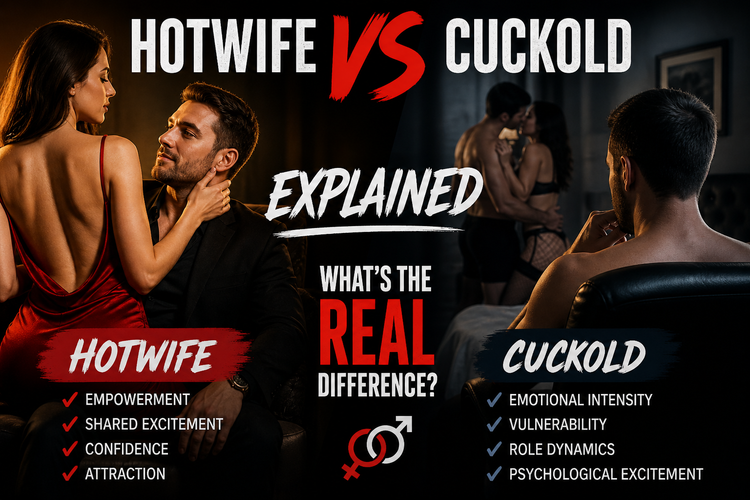
If you're moving toward the hotwife or cuckold dynamic, consider gear like:
- Bold apparel with explicit messaging — Something that makes the dynamic visible and gets you both excited about what you're exploring
- Personalized pieces — Having something custom can make the fantasy feel more real
- Accessories that signal your role — Wear something that reminds you (and your partner) of the dynamic throughout the day
This might sound odd, but gear serves a psychological function—it makes the fantasy tangible and gives you both something to be aroused about.
For a deeper dive into how to use gear in lifestyle exploration, check out this guide to cuckold apparel and hotwife dynamics or explore specific posts on beginner's cuckolding and hotwife communication.
Dealing With Hesitation (Yours or Theirs)
If You Start Doubting Yourself
Cold feet is normal. Before you back out, ask yourself:
- Am I doubting this because I genuinely don't want it, or because I'm nervous?
- Is my partner giving me reason to doubt, or am I projecting my own fears?
- What specifically am I worried about?
Talk to your partner. "I'm getting cold feet. Can we talk about what I'm nervous about?"
If Your Partner Keeps Hesitating
There's a difference between "I'm processing this" and "I'm never going to be okay with this."
Red flags that they might not be interested:
- They keep saying "maybe later" but never want to discuss it
- They change the subject when you bring it up
- They seem resentful or hurt when you mention it
- They say yes to make you happy but seem uncomfortable
If you see these signs:
- Stop pushing
- Ask directly: "Are you genuinely interested in this, or are you saying yes because you think I want it?"
- Accept their answer
- Decide if this is a dealbreaker for you or something you can let go of
Important: Pressuring a reluctant partner into swinging will breed resentment and potentially damage your relationship. It's not worth it.
Real Talk: What Happens After You Talk About It
The conversation isn't the end—it's the beginning.
What typically happens next:
Week 1-2: Everything feels new and exciting. You might have more sex than usual because you're both aroused by the idea.
Week 3-4: Reality sets in. You might start wondering if this was a good idea. Questions emerge: "How do we actually do this?" "What if I hate it?"
Week 5+: If you move toward actually swinging, emotions get complex. Jealousy, insecurity, and arousal might all happen at once.
After the first experience: There's often a crash. You've finally done the thing you've been fantasizing about. It might have been amazing or disappointing. Either way, you need to debrief thoroughly.
The key: Keep communicating. Don't assume you're on the same page. Check in weekly.
Common Questions Answered
Q: What if they say no?
Accept it. You can revisit in a year if circumstances change, but don't keep pushing. Resentment kills relationships faster than anything else.
Q: Should I be prepared with specifics?
Have a general sense of what you're imagining, but frame it as "I'm curious if you'd be into exploring..." not "Here's exactly what I want to happen." Leave room for collaboration.
Q: Is it weird to be nervous?
No. This is a big conversation. Being nervous is normal and actually makes you more relatable.
Q: What if they're way more into it than I expected?
Great problem to have, but also manage expectations. Just because they're excited doesn't mean you need to jump into it immediately. Take time to plan.
Q: Can I bring up swinging again if they said no the first time?
Only if circumstances have changed (more time has passed, they've been curious, etc.). Don't use the same approach twice if it didn't work the first time.
Q: Should I tell them I've been thinking about this?
Yes. It's honest. It also signals that this isn't a random thought—you've genuinely considered it.
The Bottom Line
Bringing up swinging is one of the most vulnerable conversations you can have with your partner. You're admitting desire for others while asking them to participate. You're exposing a fantasy. You're risking judgment.
But here's the thing: couples who can have this conversation honestly often find their relationship strengthens. You're communicating at a level most couples never reach. You're being vulnerable. That builds intimacy.
So take a breath. Choose your moment. Be honest. And remember: this conversation is about connection, not just sex.
Your partner might say yes. They might say no. But either way, you'll have opened a dialogue about desire, fantasy, and what turns you both on. That conversation is valuable in itself.
Related Resources:
- Understanding Cuckold Relationships: A Complete Beginner's Guide — If your conversation leads toward the cuckolding dynamic
- Beginner's Guide to Cuckolding: Communication, Consent & Confidence — Deeper dive into communication frameworks for lifestyle exploration
- Hotwife Lifestyle 101 — Full guide with gear recommendations
- How to Handle Jealousy in Open Relationships — What comes after the conversation